"A Simple Enema" why we
should use them.
General all over better health.
Some symptoms helped with enemas, coated tongue, constipation, backache, bad breath,
bloating, fatigue, bad gas, headaches, indigestion, loss of concentration, lung
congestion, sinus congestion, skin problems, nail fungus, and symptoms of yeast infection.
Colon health problems
Constipation, diarrhea, frequent severe headaches, backaches, fatigue, bad breathe, foul
body odor, irritability, frequent mental confusion, chronic skin problems, abdominal gas
and bloating, lower back pain, sciatic pain, low resistance to colds and infections, low
energy and vitality
Constipation
Take a look at the following categories of diseases and disorders that can also be related
either directly or indirectly to the colon: Heart Disease, High Blood Pressure, Stroke,
Varicose Veins, Deep Vein Thrombosis, Pulmonary Embolism, Diabetes, Gall Stones, Kidney
Stones, Obesity, Gout, Rheumatoid Arthritis, Multiple Sclerosis, Psoriasis,
Auto-Intoxication
(the re-absorption of soluble wastes and toxins into the bloodstream)
Self-poisoning caused by endogenous microorganisms, metabolic wastes, or other toxins
produced within the body. Also called autotoxemia.
Diarrhea
Loose, watery stools occurring more than three times a day
How to take a simple Enema
{A} The most important thing you need to know about receiving
an enema is too. "Relax"
Relaxation is a key ingredient for taking and receiving a good enema.
{B} Another is Communication. The recipient needs to communicate to the
administrator how they are feeling if they are feeling uncomfortable, cramping or getting
full. The administrator should encourage the recipient to let them know how well
they are doing.
{C} Consideration is another important part of enemas. The administrator needs to
make the enema as comfortable and relaxing as possible for the recipient.
Steps for a Simple Warm Water Enema
(1) Choose a warm comfortable place for
your enema. Collect all of the equipment you will need.
An enema bag or bucket with tubing, shut off and nozzle. A 2 qt. pitcher for
extra warm water, towels, Lubricant for the
nozzle/rectal tube. Super Salve Surgilube.
Need an enema bag or supplies? Click here
(2) Fill enema container with warm filtered water (water
should be 103°F) make sure tubing clamp is closed,
Lubricate the nozzle/rectal tube, Their are many positions for administering or receiving
enemas. ( Enema
Positions)
After you are in position. Gently insert the nozzle/rectal tube and start water
flow. It should flow in at a rate of about 1 cup. per minute (8 oz.),
If you feel cramping clamp the tubing off and wait for cramping to subside, this should
only take a few seconds then resume the flow. Try to take the entire contents of the enema
bag during one injection. If you cannot hold the entire bag move to the toilet and
expel. Then refill the enema bag and began again.
When receiving the enema:
Massage abdomen in a counter-clockwise direction this will help move the solution higher
into the colon.
Massaging the abdomen during the administration of an enema will help the recipient except
more of the enema solution.
(3) After you have taken as much solution as possible, clamp the tubing off and
remove the nozzle then try to hold the enema solution for 5 to 10 minutes then move to the
toilet to expel your
enema.
Holding the enema solution for 5 to 10 minutes will ensure a good cleaning of the large
intestine.
When expelling the enema:
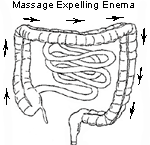
Massage abdomen in a clockwise direction this will help move the solution back toward the rectum and
anus.
Massaging the abdomen while expelling the enema helps move the solution and feces toward
the rectum and out the anus.
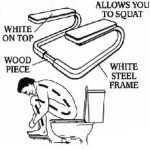
The best position for expelling your enema is squatting over the
toilet. The squatting position puts pressure on your abdomen from your thighs.
In many countries, toilets are made so that people squat when they move their bowels. The
Welles Step positions your body so that you are squatting when you sit on the toilet.
Squatting, supports the abdominal wall and the bowel as we bear down, brings about
an easier bowel evacuation. In this way.
People who use the Welles Step tend to have fewer hemorrhoids, hernias, anal fissures,
varicose veins and use less laxatives.
It fits under the toilet when not in use.
It is best if you place a Welles
Step and then squat down over the toilet to release your enema |