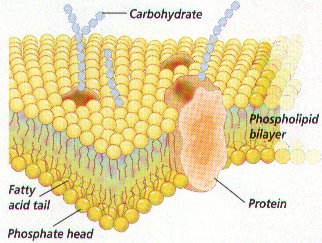
An aspect of our defense system, one which a lot of people over look- is the gut; it can be split into three parts: the gut flora, the gut mucosa and epithelium-all are related to the immune system. If for -what-ever reason, this healthy balance is damaged, disease can set in. Soapsuds/ detergent enemas destroy epithelial cells and the mucosa layers within the colon. Friendly floral live within the mucosa and between the epithelial cells. Friendly floral call lactobacillus is your fermenting bacteria and these lives in the mucosa. If you are destroying your mucosa, you are also destroying the bacteria responsible for preventing your food from rotting. Each time you insert detergents into the colon; the intestinal defense system is compromised and can lead to diseases- even cancer. Detergents and basic cell orientation: According to Kathleen Talaro, Foundations in Micro Biology,[342] “ All detergents have a general molecular structure that includes a long chain, hydrocarbon residue and a highly charged, or polar, group. Detergents operate by eliminating cellular surface tension. This can have several effects, but chief among them is the disruption of the cell membrane and the loss of its selective permeability.” Below, see figure 1: her is the basic cell and some organelles (inside cell). When scientists use detergents with cells, they are trying to obtain the nucleolus, mitochondria, and other parts of the cell without damaging them. The detergent strips away the fat. (Phospholipids bilyer) Please see figure2. The phospholipids bilayer is responsible for protecting the cell, allowing nutrients to pass in and out and to ward off bacteria and viruses. So, when the phospholipid's damaged -by using soapsuds enemas, you run the risk of cell mutations, cell damage, cell death, or a multitude of diseases. You see how this might contribute to cancer? Fig 1 basic cell and its organelles: 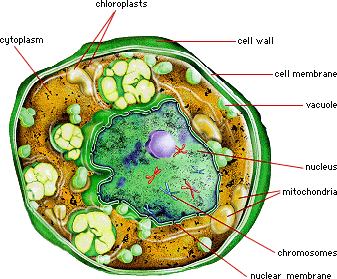
Fig 2 basic cell wall: Now, there’re several layer to our intestinal track. Among which are two mucosa layers. This is where our cells meet up with broken down nutrients. This website http://northonline.sccd.ctc.edu/tstilson/ANP%20Ch%2024%20Outline.html talks about the mucose: “There are two layers of mucosa consists of an epithelia and its basement membrane ("laminapropria") and a thin layer of smooth muscle that can move locally. Thelamina propria, by the way, carries the blood and lymph capillaries that will pick up nutrients from the interior of the digestive tract. It also houses MALTlymph nodules (Peyer's patches). According to the quote found below- by M, Shmeltzer, soapsuds
enemas cause epithelium loss. Soapsuds/detergent enema and the destruction of epithelia
cells within our colon. If you are destroying your intestinal cells using detergents, how
can you absorb your nutrients? While the colon is not primarily responsible for nutrient
uptake, it still has its roll. |
|
| Friendly Floral: What exactly does friendly floral or probiotics mean anyway? The term 'probiotic' comes from the Greeks; it means ‘for life’- meaning a mono- or mixed culture of living microorganisms. Here is some great information: the state of balance within the GI tract is called "eubiosis". I love that word! On the flip side-the imbalance is called "dysbiosis". Flora balance requires beneficial bacteria, such as Lactobacilli and Bifidobacteria- in abundance. Part of our immune system- this presents a barrier and protects us from invading organisms. What is normal? Somewhere around 90%of the intestinal friendly flora- in a healthy person- should be good bacteria and around 15% should be bad bacteria. The greater the imbalance is, the greater the chances of disease setting in. Also as part of the immune system, friendly floral creates a
nice healthy microbial fermentation, that takesplace in the colon. All those little
microbes can produce enzymes capable of digesting molecules that the small intestine can’t.
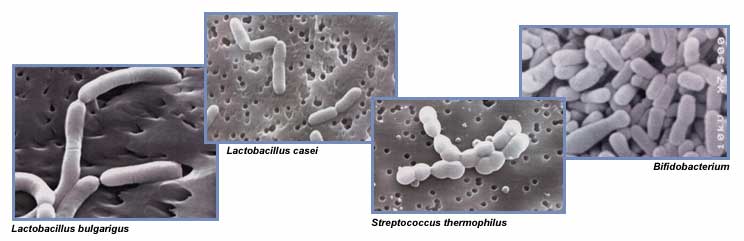
Scientific evidence 2 Additional Info: UNITED STATES Standard No: ISSN: 0192-0790 (Print); NLM Unique Journal Identifier: 7910017 Language: English Abstract: Acute colitis occurred after a Hibiclens cleanser enema. Endoscopic and histologic features were not helpful in distinguishing colitis from an infectious or idiopathic colitis, and a careful history proved invaluable. We review the complications of using soapsuds and various chemical-containing enemas; these complications range from mild colitis to death. Because soap and other chemicals are damaging to colonic mucosa… Subject(s) below: Chemical Subst: Soaps Colonization Resistance & barrier effect: defined as indigenous bacterial that competes to kill down pathogenic bacteria- part of the immune system. I’m sure you know all this, but I will mention it anyway. These are some basic and common names for probiotics and are used interchangeably. ‘Friendly floral’, ‘beneficial’ or ‘healthy’ bacteria; also, here are more examples: lactic acid bacteria include Lactobacillus acidophilus, L. casei, L. bulgaricus, L. plantarum,L. salivarius, L. rhamnosus, L. reuteri. Bifidobacterium bifidum, B.longum, B. infantis and S. thermophilus. This is very interesting! Now, Bifidobacteria bacteria plays a key role in enhancing the resistance to the colonization of exogenous- a potentially pathogenic organisms. Bifidobacteria should account for more than 90% of the total intestinal bacteria. Lactobacilli is especially important as it is strictly fermentative, and it is found in the MUCOSA layers of the colon. If you’re using detergent/soapsuds enemas, you are destroying the mucosa layer where friendly floral live deep inside, in and around. (remember the scientific evidence I provided above) Due to the destruction of ( friendly floral) lactobacillus ( your fermenting bacteria) food will not properly ferment leading to purification and systemic toxic build up. Also, by using detergents with each enema, you’re allowing other more dangerous pathogens to move in and take over. Friendly floral can provide nutrients for the body; fore example, L. acidophilus and bifidus may produce B vitamins including niacin, folic acid, biotin, and B6, as well as vitamin K. So, In addition to providing the body with useful nutrients, probiotics inhibit pathogenic bacteria in the gut: See how they form part of the body's defense system against pathogens and microorganisms? Friendly floral creates a symbiotic relationship with our entire body. Furthermore, friendly floral secrete lactic and acetic acids, to decrease the pH of the gastrointestinal tract which creates a less hospitable environment for pathogenic bacteria, and according to http://www.natren.com/pages/cancer.html “…friendly bacteria have been shown to reduce levels of dangerous, carcinogen-forming enzymes in your gastrointestinal tract, as well as boost the function of your immune system.” Friendly floral secrete bacteriocins; this is a powerful natural antibiotics that kill undesirable bacteria, and according to Home Care group, http://home.caregroup.org/clinical/altmed/interactions/Nutrients/Probiotic_Intes.htm
Probiotics and barrier function in colitis “... For years, researchers have tried in vain to identify a specific pathogen as the cause ofthese chronic intestinal inflammatory disorders but the possibility that one or more bacterial agents are responsible cannot be ruled out. Considering the implications of a pathogen in IBD, as yet undiscovered due to technical limitations, it was hypothesised that modulation of an abnormal microflora in these patients by introducing high titres of "protective" bacteria might overwhelm the "aggressive" strain(s) and inhibit its deleterious effects. On this basis, probiotic treatment wasproposed as a therapeutic approach.” To present the consensus of these studies first, it appears that probiotics with or without prebiotics have an inhibitory effect on the development of aberrant crypts (precancerous lesions) and tumors in animal models. To present the conclusion first, it appears from the sestudies that probiotics with or without prebiotics have an inhibitory effect on the developmentof aberrant crypts (precancerous lesions) and tumors in animalmodels. .. http://www.ajcn.org/cgi/content/full/73/2/430S http://www.healthyeatingclub.com/APJCN/Volume5/vol5.1/mcintosh.htm
Here is scientific evidence 3 This quote shows that soapsuds/detergent enemas cause colitis and damage the mucosa layer of the colon. MICROBIALNUMBERS AND THE INTESTINAL ECOSYSTEM: great reading http://customprobiotics.com/about_probiotics_a.htm
“The25-35 foot long GI tract of an adult human is estimated to harbor about 100 trillion viable bacteria. This is approximately10 times the total number of cells in the human body. These live bacteria account for around 2 lbs of a body's weight and are known as intestinal or gut flora. Viruses, fungi and protozoa can also be present, but these normally form only a minor component of the total resident population of microorganisms in healthy individuals. The density of microorganisms in thegut flora increases dramatically from10-1,000 CFU/ml in the stomach to10-100 billion CFU/gm in the largeintestine(1) and these be long to as many as 500 different species, and anaerobic bacteria out number aerobic bacteria by a factorof 1000:1. Anaerobic flora is dominated by Bacteroidesspp.,bifidobacteria, propioni bacteria and clostridia. Among aerobicandanaerobic bacteria enterobacteria, mainly E.coli, andenterococcipredominate. Bacteria have been estimated to constitute 35-50% of the volume of the contents in the human colon. They profoundly influence nutritional, physiologic and protective processes. Both direct and indirect defensive functions are provided by the normal microbiota. Specifically, gut bacteria directly prevent colonization by pathogenic organisms by competing for essential nutrients or for epithelial attachment sites. [ if you damage these cells, then where do the bacteria attach to?] By producing antimicrobial compounds, volatile fatty acids, and chemically modified bile acids, indigenous gut bacteria also create a local environment that is generally unfavorable for the growth of entericpathogens. This phenomenon is called Colonization Resistance, which can be defined as the ability of microorganisms belonging to the normal gut microflora to impede the implantation of pathogens. This function of the microflorais also known as the barrier effect. While probiotic bacteria improve colonization resistance, consensus thinking is that the importance of lactic acid bacteria as probiotic agents lies more in the in direct mechanisms such as immunomodulation. “
|
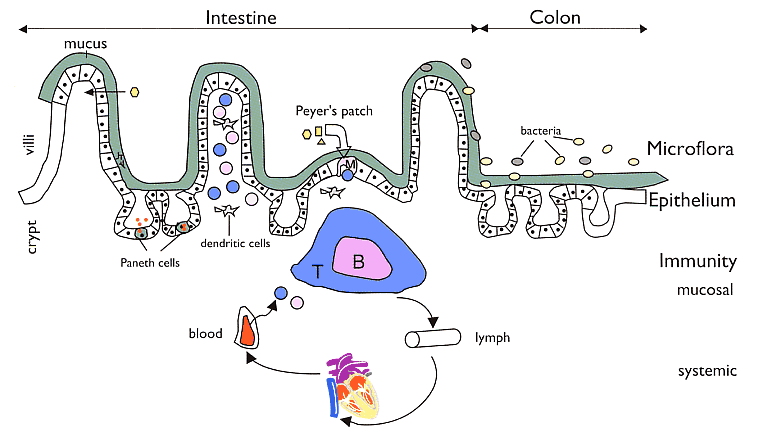
| Friendly floral and immunity: Diagram 1
Diagram 1: " The intestinal flora, present mainly in the colon, forms a natural barrier to pathogens. The intestinal immune system comprises cells disseminated beneath the epithelium and also between epithelial cells (intra epitheliallym phocytes). Lymphocytes are also found within more organized structures, lymphoid follicles, with a central region of B lymphocytes and a lateral region of T lymphocytes. Above these structures, we find M cells, which are specialized in transporting particles to the follicle. These areas of the intestine are known as Peyer's patches. When a lymphocyte is activated by adendritic cell presenting an antigen, it leaves the mucosa in lymph and enters the bloodstream via the thoracic canal. This activated lymphocyte then colonize either the same mucosa or other mucosal effector sites.” Recommendations: It’s important to take safety measures and learn a little about our anatomy and physiology before starting an enema protocol. The tissue of the colon is very sensitive, absorptive, filled with living microorganisms and is part of our defense system. Because of these factors, it’s important to only use quality solutions for stimulation. I recommend using 1 teaspoon of Sea Salt per quart of water to replace your electrolytes, and use friendly floral after each enema protocol. In order to take safe enemas, you must start with safe water. Water is important, because it’s best for cleaning the colon. By using clean warm water, the sudden change in temperature facilitates the peristalsis, so by using warm water and simple non harsh recipes, you can remove old fecal mater and heal your colon. Do not use chemical or detergent based enemas. I highly recommend using safe protocols to meet your colon cleansing need as they actually build the colon’s natural floral and help to rebuild the colon wall and promote regularity; they do not damage the cells, mucosa or friendly floral. It’s good all-round.
"Olive Oil/ Aloe Vera: This is my favorite recipe. In an enemabag, pour one cup of organic olive oil and one cup of organic aloe vera juice. Open four MSM capsules and mix with liquid. Slowly pour into colon with enemabag. Hold as long as you are able. This will soothe the intestinal lining during inflammation as well as clean the colon. Flaxseed Oil can be used inplace of the Olive Oil but will be less soothing and more directed towards eliminating candida infestations." "Slippery Elm: In a blender, mix4 cups water with one tablespoon of slippery elm powder. Blend and strain. Add toenema bag or bucket. This mixture is reported to neutralize an acid colon and absorb foul gases. It may be good for colitis, diarrhea and hemorrhoids." "Acidophilus/Bifidus These two probiotics are excellent healthy bacteria for balancing intestinal flora. Put 1teaspoon in 2 cups of water or aloe vera juice and hold the mixture for as long as you can. It is great to do this procedure after a colonic." "Include flaxseed tea, white oak bark and slippery elm bark. These herbs soothe, lubricate and introduce powerful healing agents directly into the large intestine." |
You can Use your back button to return to the previous page.

For
qualaity enema and colonic supplies + much much more
visit Enema Supply.Com

You will be
absolutely amazed at the supply of herbs and herbal products!!
If it's about
health...we're there! Yoga for the mind and body + an assortment of great products.

Coffee enemas have amazing benefits for
detoxifying the liver. Try Wilson's.


Warning: Do not use enemas or laxatives if
abdominal pain, nausea, or vomiting are present unless directed by your health care
provider. |