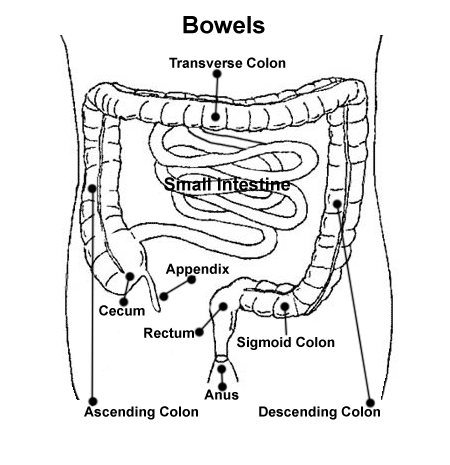
Most people feel embarrassed to
talk about their digestive systems - especially their intestines
What should they look like? Normal bowel movements should be soft and easy to pass. They shouldn't be dry, hard, or painful. If they are, or you've gone for more than four days without having a bowel movement, you are probably constipated. Constipation means that you're not moving your bowels often enough, or your bowel movements are hard and dry and usually painful to pass. If you think that you're having a problem with
constipation, there are some simple ways of getting your bowels back on a regular
schedule. Most of the time this means changing the kinds of foods you eat. You may need to
eat fewer fatty and greasy foods (like fried foods) and fewer sugary foods (like candy
bars and chocolate). You need foods rich in fiber (like fruits, vegetables, and
whole grains). Exercise is another way to keep your digestive
system moving, so you may want to replace some TV time for a bike ride or some sport
activity. You might also try getting up a little earlier in the morning to give yourself a
few extra minutes to use the bathroom before going out. And no matter what the TV commercials say, try
not to use laxatives unless it's absolutely necessary, consult your doctor to see
if the use of laxatives is appropriate.
|
|
| Bowel Retraining There are several methods for bowel retraining. These methods can often help people with a variety of conditions that lead to the problem. It is not a substitute for other forms of treatment because it does not cure the reason the problem occurred. The main goal of bowel retraining is to produce regular bowel movements and reduce the need for medication and surgery. The diet should have enough fiber and fluids to promote soft, bulky stools. Grains and vegetables are good sources of fiber. Two quarts of fluid a day are advised. Diet supplements containing psyllium may add bulk to the stool and further promote well formed stools. A person should set aside time for daily bowel movements. The best time is 5 to 45 minutes after a meal, since food stimulates the bowels. This routine often encourages the person to pay attention to the body's signals. Trying to have a bowel movement about the same time each day helps train the bowel to empty regularly. For people with nerve damage or certain other conditions, bowel movements can also be brought on by stimulating the anus and rectum with lubricated gloved finger. The tip of a gloved finger that has been coated with lubricant can be inserted into the anus and moved in a circular motion. Sometimes a suppository or small enema may also help to get the bowels moving. This technique should only be used on the advise of a health care professional. Care must be taken to prevent tearing the fragile tissue inside the rectum or the anus. The preferable position for a bowel movement is sitting down with a normal posture if possible. Reading may help a person relax, which can aid a bowel movement. While the stool is being expelled, a person should try to squeeze the stomach muscles and bear down. This increases the pressure in the abdomen, helping to empty the bowel. A consistent pattern is the key to success of a bowel retraining program. Within a few weeks, many persons are able to establish regular bowel movements. Other techniques may include exercises to strengthen the pelvic and rectal muscles. Bowel retraining is generally performed until
symptoms improve. This helps to establish a good pattern of bowel regulation and care. The
person is free to go back to their normal routine, Are there any potential complications after the procedure? A person should speak with his or her healthcare professional before considering any therapy. Some people may need to omit certain portions of these suggestions. For instance, a person with congestive heart failure or chronic renal failure may not be able to drink 2 quarts of fluid a day because they can get overloaded. Medications used to move the bowels, such as suppositories, may cause diarrhea and salt imbalances in the body. |
You can Use your back button to return to the previous page.






File Inventory Page
Warning: Do not use enemas or laxatives if abdominal pain, nausea, or vomiting are present
unless directed by your health care provider.
Rectal bleeding or failure to have a bowel movement after use of a laxative or enema
may indicate a serious condition.
Discontinue use and consult your health care provider.
Statements contained within these web pages are for informational purposes only,
and have not been evaluated by the FDA.
These products are not intended to diagnose, treat, cure, or prevent any disease.
If pregnant or have an existing medical condition consult your healthcare provider
before using.