Never inject anything into your
colon hotter than 115?Fahrenheit.
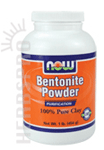
Bentonite is a soft,
volcanic clay mined from various locales around the world. It is also known as
montmorillonite or fuller's earth. Bentonite was historically used by Native Americans for
purification and healing. This powdered clay can be used for masks, shaving, or for oily
hair and scalp. Bentonite, a clay water, when added to enema water assists in absorbing and mobilizing toxins from the bowel wall. |
People of every
continent have used volcanic ash for ages both internally and externally. Technically, the clay first adsorbs toxins (heavy metals, free radicals, pesticides), attracting them to its extensive surface area where they adhere like flies to sticky paper; then it absorbs the toxins, taking them in the way a sponge mops up a kitchen counter mess. There is an electrical aspect to bentonite’s ability to bind and absorb toxins. According to Yerba Prima, a company based in Ashland, Oregon, which markets Great Plains Bentonite, the clay’s minerals are negatively charged while toxins tend to be positively charged; hence the clay’s attraction works like a magnet drawing metal shavings. But it’s even more involved than that. Once hydrated (combined with water), bentonite has an enormous surface area. A single quart bottle can represent a total surface area of over 900 square yards. Bentonite is made of a great number of tiny platelets, with negative electrical charges on their flat surfaces and positive charges on their edges. When bentonite absorbs water and swells, it is stretched open like a highly porous sponge; the toxins are drawn into these spaces by electrical attraction and bound fast. Bentonite can absorb pathogenic viruses, toxins, and pesticides and herbicides. The clay is eventually eliminated from the body with the toxins bound to its multiple surfaces. Clay’s adsorptive and absorptive qualities may be the key to its multifaceted healing abilities. Benefits reported by people using liquid clay for a period of two to four weeks include: improved intestinal regularity; relief from chronic constipation, diarrhea, indigestion, and ulcers; a surge in physical energy; clearer complexion; brighter, whiter eyes; enhanced alertness; emotional uplift; improved tissue and gum repair; and increased resistance to infections. Clay works on the entire organism. No part of the body is left untouched by its healing energies. Bentonite can end bouts of diarrhea. When 35 individuals (average age 51) suffering from diarrhea took two tablespoons of bentonite in distilled water daily, the diarrhea was relieved in 97% (34 of the 35 patients) in 3 days, regardless of the original cause of the problem (allergies, virus infection, spastic colitis, or food poisoning). A safe and highly effective solution in treating acute diarrhea. Regular intake of liquid clay (typically one to three tablespoons daily, in divided doses) can produce other benefits including parasite removal from the intestines, allergy and hay fever relief, and elimination of anemia and acne. It reduces discomfort from allergies by quickly neutralizing allergens that would otherwise produce allergic reactions; and it reduces heartburn and indigestion by absorbing excess stomach acids. However, clay’s forte is probably its role as a general internal detoxification and cleansing agent. According to Keith Payne of White Rock Mineral Corporation in Springville, Utah, clay scrapes and cleans the lining of the colon. “As the colon becomes cleaner, its ability to absorb minerals and other nutrients increases, making the minerals even more bioavailable, thus giving more energy.” Some Bentonite is derived from an ancient seabed formation in Utah; according to geologists, the clay formed when a layer of volcanic ash fell into what was, long ago, a shallow inland sea. The best way to drink clay is on an empty stomach, or at least an hour before or after a meal or immediately before sleeping at night. Typically, clay is available as a thick tasteless, pale-grey gel, but it also comes as in powder or encapsulated. Generally, it is advisable to start with one tablespoon daily, mixed with a small amount of juice or water 6 to 12 oz. should be sufficient, observe the results for a week, then gradually increase the dosage to no more than four tablespoons daily, divided throughout the day. Drinking clay can be an annual spring cleaning of your gastrointestinal tract or it can be a symptom-focused, self-care method of intestinal improvement. Using Bentonite clay in enemas ! Enema Recipe: Directions for Administering an Enema
|
Use your back button to return to the previous page.


For
qualaity enema and colonic supplies + much much more
visit Enema Supply.Com

Bulk herbs
as well as an amazing supply of medicinal herbs and aromatherapy

Complete your
body regimen with yoga for the mind and body + an assortment of great products.

Coffee enemas have amazing benefits for
detoxifying the liver. Try Wilson's special brew!

Visit Herbspro.com for
Branded Vitamins and Herbal Supplements

Warning: Do not use enemas or laxatives if abdominal pain, nausea, or vomiting are present
unless directed by your health care provider.
Rectal bleeding or failure to have a bowel movement after use of a laxative or enema
may indicate a serious condition.
Discontinue use and consult your health care provider.
Statements contained within these web pages are for informational purposes only,
and have not been evaluated by the FDA.
These products are not intended to diagnose, treat, cure, or prevent any disease.
If pregnant or have an existing medical condition consult your healthcare provider
before using.