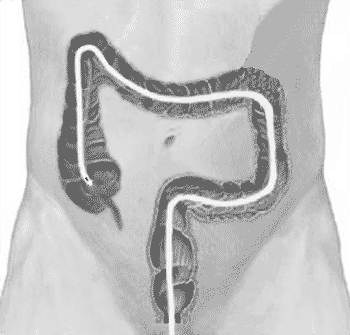
An air enema is where air is injected into the anus filling the
rectum and colon.
Air or CO2 is also injected into the colon most often during a colonoscopy or barium enema
Their are times when people wish the experience of feeling a full colon without
having too inject themselves with 2 qts. of enema solution and sit on the toilet
and wait to expel solution and feces.
That is where an air enema can come into use and this type of enema can be achieved in
several ways.
(1) You can use a bulb
syringe and inject bulb after bulb of air into your rectum
until you are completely filled.
(2) You can remove the hose
from your enema bag and insert the nozzle into your rectum and then blow air into your
rectum and colon until you achieve that full feeling.
(3) If your syringe is a multi-use
water bottle, enema bag, douche, fountain syringe . You inflate the bag with air
clamp off the tubing. Then insert the nozzle into your rectum, release clamp and squeeze
the bag.
(4) A syringe that works excellent for an Air Enema is the Higginson
Enema Syringe
This easy to use, quality syringe allows you to place the nozzle end of the syringe into
anus and pump as much air as you can hold.
Or place the suction end of the tube in a container with enema solution and take an enema
then remove the suction end and pump air into the rectum. You can alternate between
the air and water for a very stimulating enema.
The easy to use hand pump allows you to inject as much air and or enema solution as you
can hold.
Caution:
Mixing air and water in the colon can cause moderate to severe cramping.
A must have for the enema enthusiast! |
What is
a Air Contrast Barium
Enema?
This is a test which uses x-rays and a special kind of enema to take pictures of the colon
or large bowel ( large intestines). The test shows the doctor if there is anything wrong
inside the colon and how well it is working. An Air Contrast Barium Enema is especially
good at finding causes of rectal bleeding and other intestinal related troubles.
WHAT HAPPENS DURING THE
TEST?
1.During the test, you will lie on the x-ray table.
You will be given an enema
of a special liquid called BARIUM.
After this enema is injected, some of the barium will be drained out, and an enema of air
will be given. The barium will show up outlining your
colon on the x-rays.
After the enema is given, the x-ray technologist or doctor (radiologist) will take x-rays
of your abdomen.
2.Nothing will hurt you during the test, you might become a little uncomfortable as they
use quite a bit of barium solution. but you will need to lie still on the x-ray table. If
you are unable to lie still, he/she will be restrained with a special seat belt. This test
lasts about one hour or sometimes longer. The x-ray technologist will keep you informed.
PREPARING FOR YOUR TEST:
1.Before you come to the hospital, you need to do several things to get ready for the
enema.
For children explain to them what is going to happen use simple words and explain only
right before the test.
2.On the day before the test, you may have nothing but clear liquids all day. You should
not eat any solid food, and may drink only clear liquids. Clear liquids include: water,
broth, clear juices such as apple or cranberry, and fruit punch, Kool-Aid or soft drinks.
If you are taking medicine ordered by a doctor, give or take them at their scheduled
times.
3. Take a high
enema or Series to clear the colon.
4.You will need to drink two
doses of a laxative
before the day of the test. If you will be coming to a Hospital as an outpatient for this
test, you will need to buy the laxative (Magnesium Citrate) at a local pharmacy. Give the
Magnesium Citrate about 3:00 PM on the day before the test, and again at bedtime the
night before the test you can also take an enema.
4.On the day of the test, you should not eat or drink anything for four ( 4 ) hours before
the test, and take a warm water high
enema or two this insurers you completely clean the colon.
5.Report to the Radiology Department reception desk at the scheduled time. You will need
to fill out some forms or answer some questions to register before the test.
Sometimes, there is a short wait before the test begins,. If you have
questions about preparation for the test, call the Radiology Department
1.The Radiologist will tell you that you may leave when all the x-ray pictures are taken.
You may return to normal daily activities. Results of the test will be sent to your
doctors office. He/She will contact you about the results.
2.After the Barium Enema test, it is helpful for you to drink plenty of liquids to
help to pass the barium out of your colon. Take plenty liquids like juices, water,
Kool-Aid, or fruit punch. You can also take warm water retention enemas. |
Colonoscopy
Colonoscopy is a procedure that is
performed by a physician specializing in gastrointestinal problems.
It is also an other procedure where air is pumped into the colon. They inject air
into the colon to distend the large intestine so the instrument will pass smoothly.
A virtual colonoscopy also uses the air to distend colon.
The entire colon is examined using a lighted flexible tube that is inserted into the anus and advanced to the end of the colon which is called the cecum. The cecum is at the junction of the colon and small
intestine. Colonoscopy is a diagnostic and/or therapeutic procedure used to help in the
diagnosis of colon cancer, inflammatory bowel diseases hemorrhoids and other problems related to the colon.
During the procedure the physician may take small tissue samples or remove growths on the
lining of the colon.
The procedure usually takes about 45 minutes. During the exam, there is often a feeling of
cramping, bloating or pressure in the abdomen. Your health-care provider may give you
medication to help you relax and better tolerate the examination. Patients are usually on
their left side or on their back during the examination. After the procedure is completed
you will recover for about 30 to 45 minutes.
Since the colon is expanded with air during the procedure, you are encouraged to pass
flatus ( gas) during the recovery period. After you return
home you may wish to take a high enema series to help remove
any remaining gas in your colon.
|
Possible
complications or risks of colonoscopy
Perforation and bleeding are the most common of the major complications associated with
colonoscopy. Perforation is a tear through the wall of the bowel that may allow leakage of
intestinal fluids. Perforations are generally treated with hospitalization, antibiotics,
and possible surgery. As mentioned, another possible complication is bleeding, usually at
the site of a biopsy or polyp removal. Most cases of bleeding stop without treatment or
can be controlled at the time of the procedure
Because you will be mildly sedated you will not be able to drive after the procedure,
therefore, YOU MUST ARRANGE FOR A RESPONSIBLE ADULT (OVER 18) TO ACCOMPANY YOU from the
endoscopy unit after your colonoscopy.
|